
Ancient Kilns
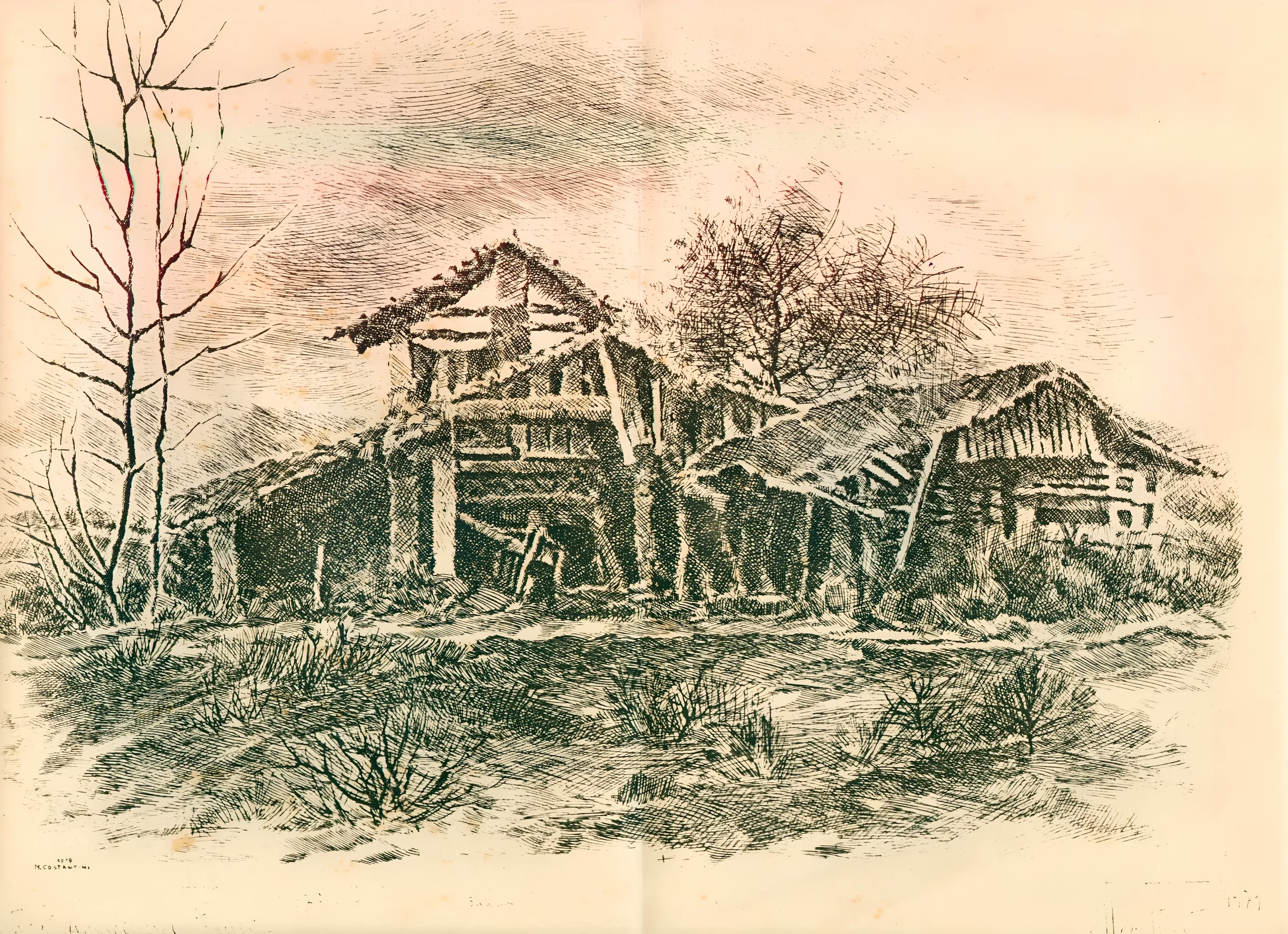 Fornace Calligaro – Buja
The production of earthen building materials, both in Friuli and abroad, represented the main economic source of livelihood for the inhabitants of the region throughout the 1800s. Poverty led almost inevitably to “forced” emigration.
There are many explanations as to why the Friulian people made a living from the production of earthen building materials, but undoubtedly the main reason was that, since antiquity, brick and roof-tile production was widespread all over the Region of Friuli. The remains of Roman, Renaissance and 18th-century kilns are scattered across the region, and new ones still come to light.
In the village of Buja, at the end of the 19th century, there existed seven kilns for the production of bricks and lime, one of which was kept burning around the clock. Among the family-run kilns, the most important was that of the Calligaro family, which was destroyed by the earthquake of 1976, even though the site and its ruins still exist.
The kiln built in 1853 by the Calligaro Brothers was defined as a provisional countryside kiln (forno provvisorio di campagna). The term “provisional” did not mean “temporary”, but stemmed from the Medieval Latin provisorium, indicating that the provision of bricks took place as they were ordered.
The remains of this kiln are a monument to 19th-century ingenuity, techniques and technology, which the Municipality of Buja is striving to preserve.
The bricks that cover the floor of the La Faula dining room and fireplace (fogolar, the traditional Friulian fireplace) come from the Calligaro kiln in Buja. They were baked by the last of the Calligaro family, Pietro, in 1969–1970, shortly before the earthquake destroyed the kiln and the man died of old age.