The Years of Franco Colautti – Part 1
During one of these pickings, from a German armored train located on the main train line between Udine and Germany, at least 10 km away from where they were picking chestnuts, cannon shells were fired repeatedly and passed over their heads aimed, probably, at today's Slovenian main arteries which connected Bovec (Plezzo) or Kobarid (Caporetto) to Italy. The fear of the pickers was such that at every shell passing overhead, they would lay down flat on the ground over the blanket which had been spread to eat lunch on, hoping to be spared. Franco clearly remembers a patrol of partisans appearing from the woodland, walking in front of them, with not a word or body sign, disappearing henceforth, in the woods to the North. The pickers hurriedly loaded the chestnuts into handbags made of 'scus' (woven corn husks) and hastily started walking home. When they arrived, the Grandparents - the Sior and the Siore - welcomed them with the words 'Beade l'ore, beade l'ore' (in Friulian Idiom 'blessed this hour, blessed this hour'). But the chores for the day were not over yet; there were the cows to be milked and the pigs to be fed, and the polenta to be cooked for dinner. After dinner followed the Rosary and the crying (because Toni, the husband of Giulie, as well as other sons and brothers, were all at war somewhere, and not a piece of news had been heard about them for months if not years). Before bed, a few chestnuts were consumed with a bit of Clinto or Americano-grapes wine. Finally, there was a deep sleep on a mattress made of 'scuss', that is, maize husks. But that night, like every night, was short because when it was still dark, the Sior would wake them up with the words: 'Bulgars jevâit, che el ze pronto el tutubel co'a polentina calda' ('Bulgarians get up, that the 'anything-goes' with hot polenta is served').
The Years of Franco Colautti - Part 1 - An Emigrant Makes Good
The Miani Counts of Angoris, fallen on hard times, had mortgaged La Faula as security to a bank. On July 22nd of 1967, Franco Colautti, then working as a steel engineer in Mexico, bought the mortgaged property for Italian Lire 9,000,000. In Enzo Ballico, Franco found a precious and efficient developer of his dream of a small farm tenancy. Enzo combined the estimable skills of a very good surveyor and those of a very good Mayor. In those days, Mayors could be re-elected for years on end, and the fact that he was Mayor of the Municipality of Povoletto (which includes Ravosa) for 17 years proves that he did a lot for the people and the municipality that he represented.
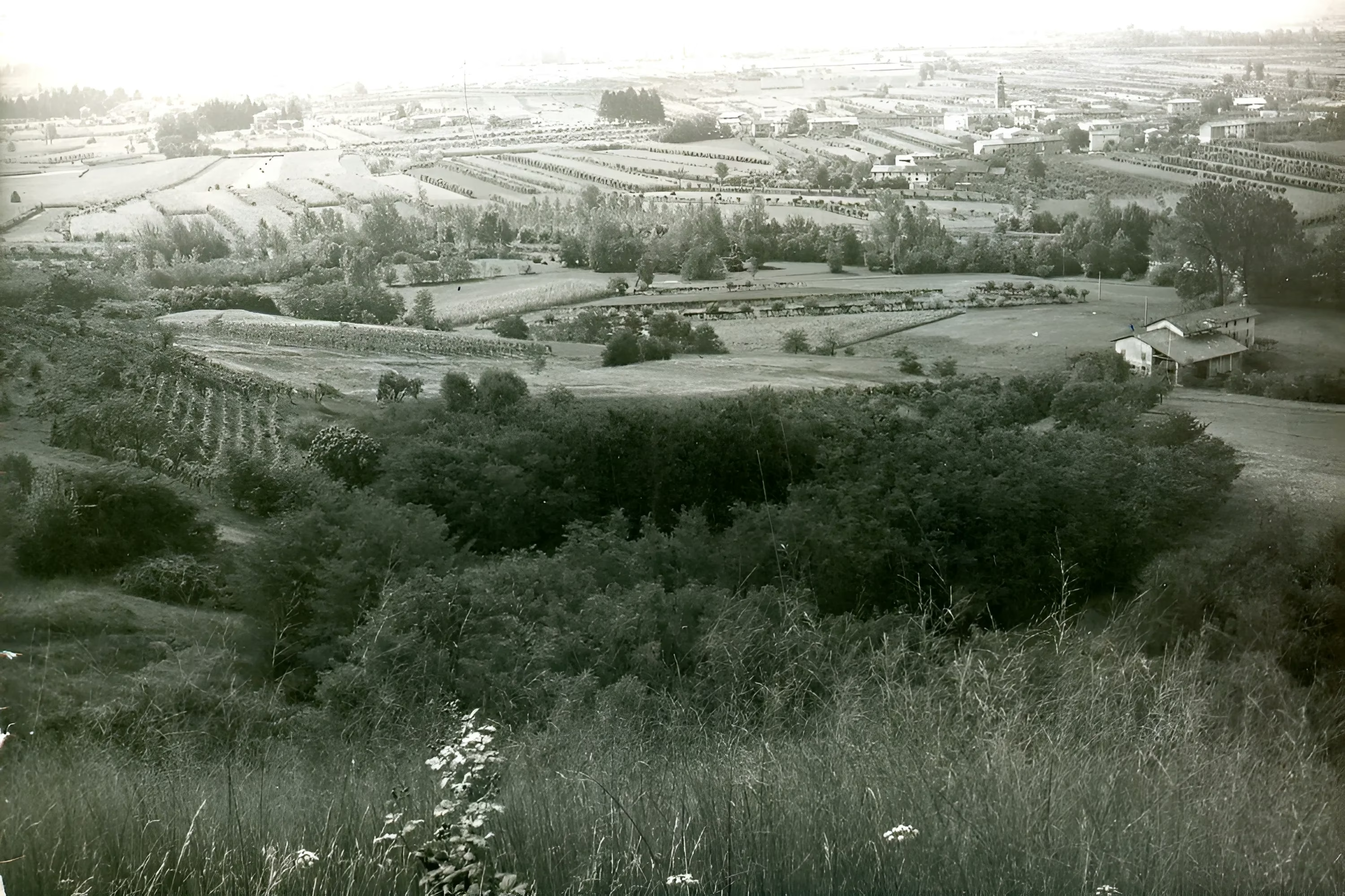 La Faula in the Late 1960s
Firstly, Enzo organised the purchase of La Faula. Such a process took two years, because La Faula had been mortgaged in favour of the creditors of the Miani Counts. But the mortgage was owned by Alberto Ceschiutti from Udine. For the sale of the property to be effective, Franco paid ITL 1,000,000 to Mr Ceschiutti for the release of the mortgage on 26th August 1965. The Counts, or rather, their procurator, had to travel from Rome to Udine to sign the act of sale, a journey they were little inclined to undertake until a court injunction forced them to turn up. The actual sale took place on the 19th July 1967 when Franco paid ITL 8,000,000 to the Miani Counts for the sale of the property. The notary's act between the Counts and Franco stating that La Faula had been freed from any lien or encumbrance and regained absolute title by settlement of the mortgage secured on it was sealed three days later, on 22nd July 1967. Notary Acts:
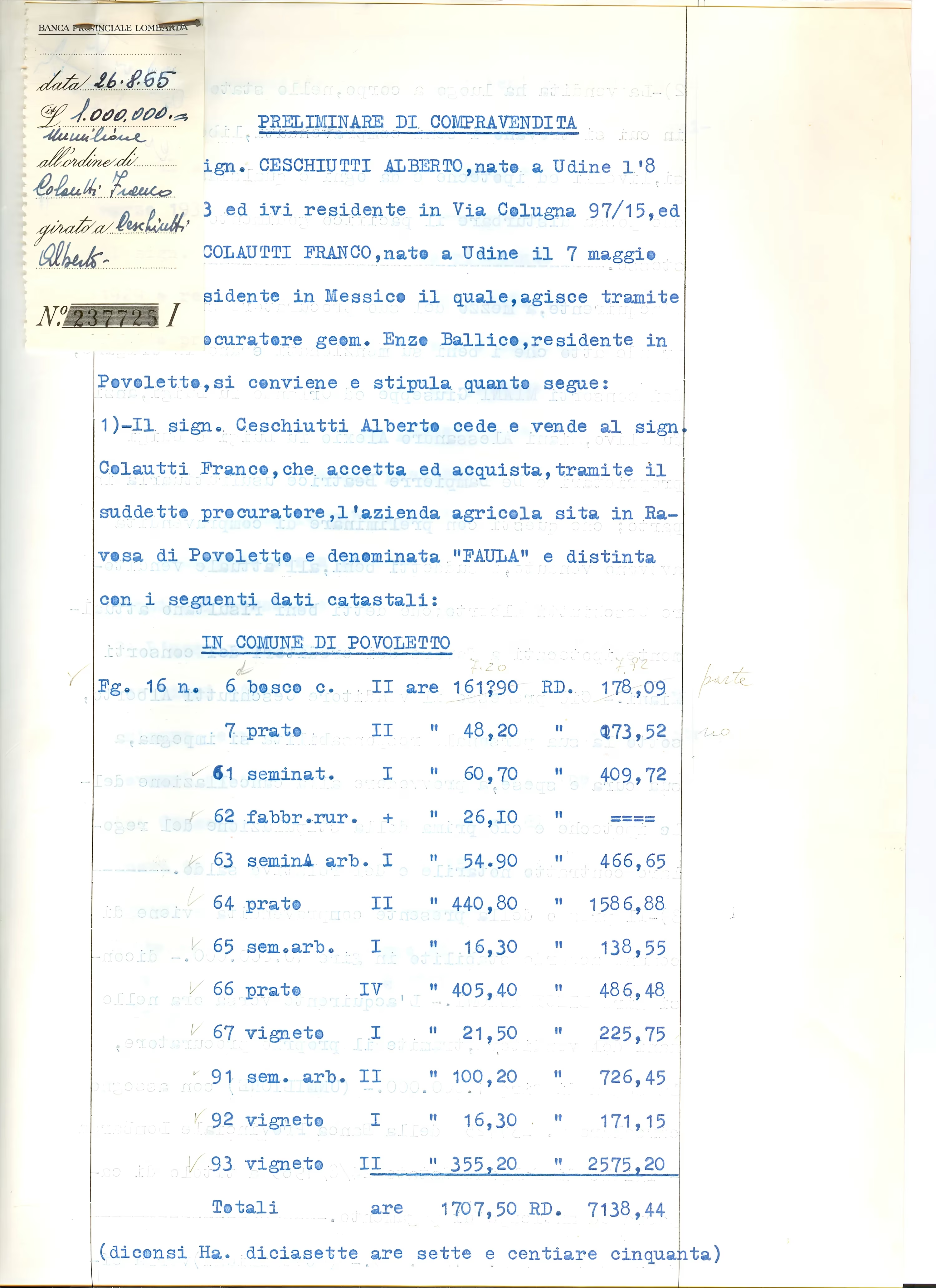
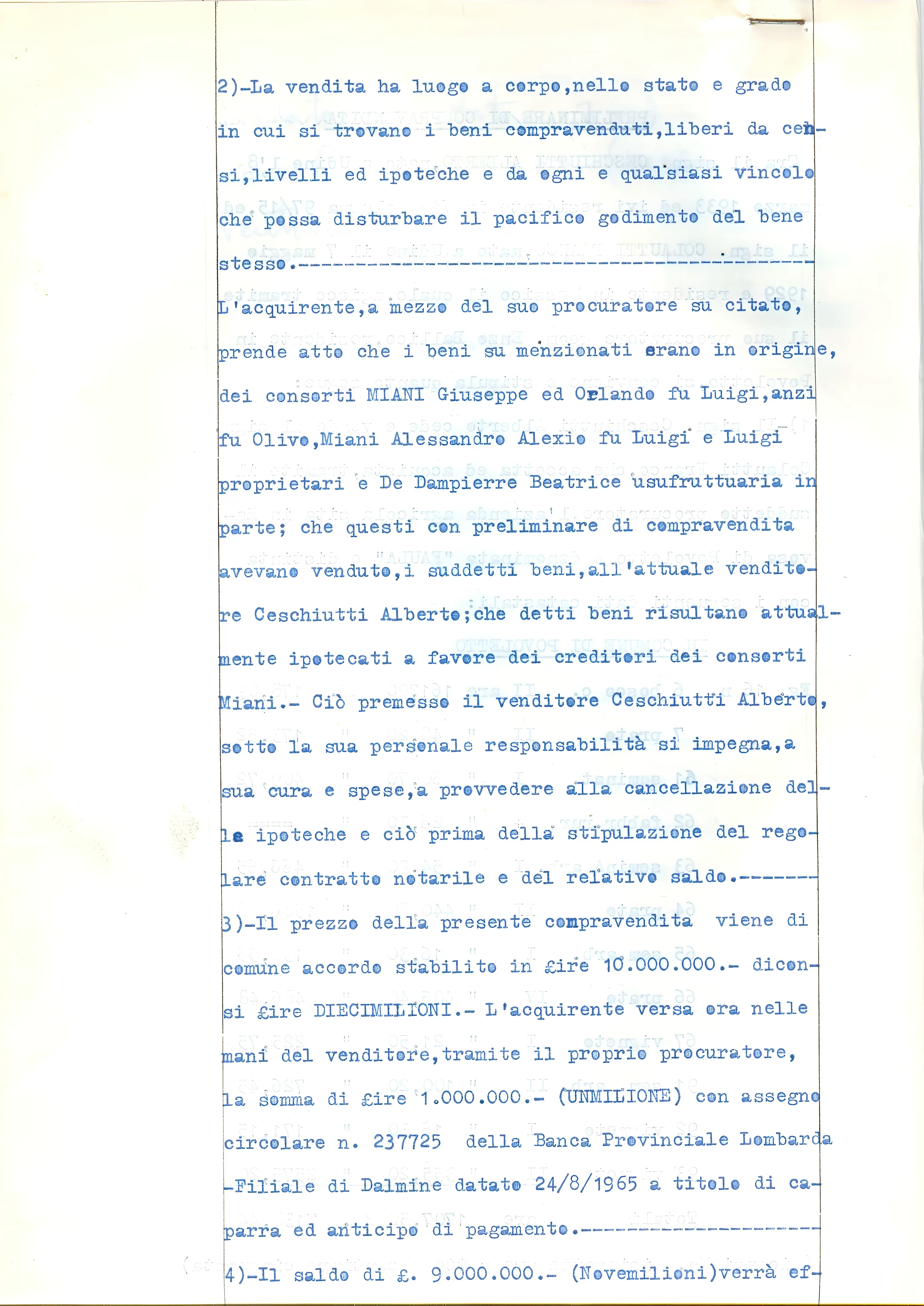
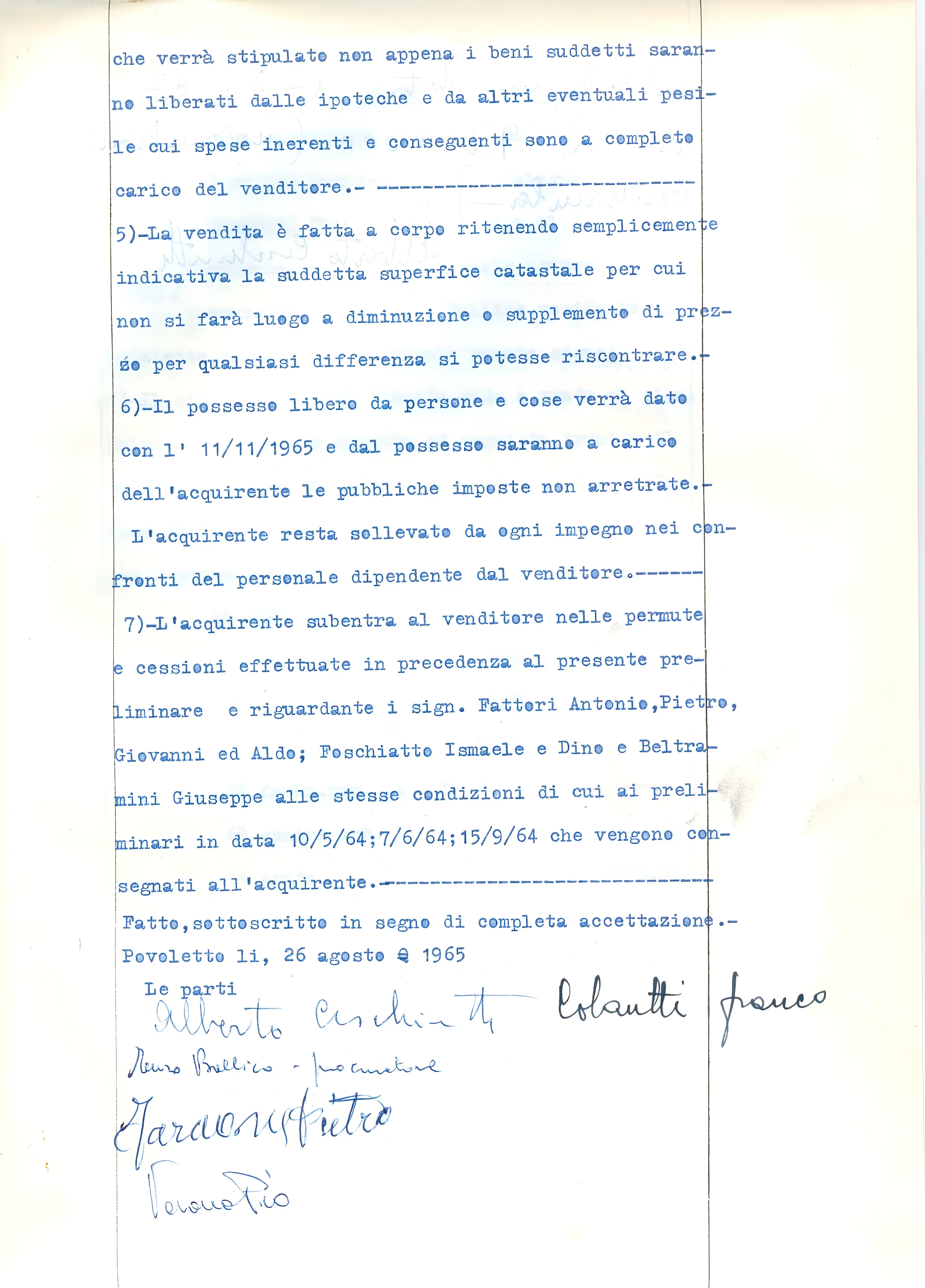
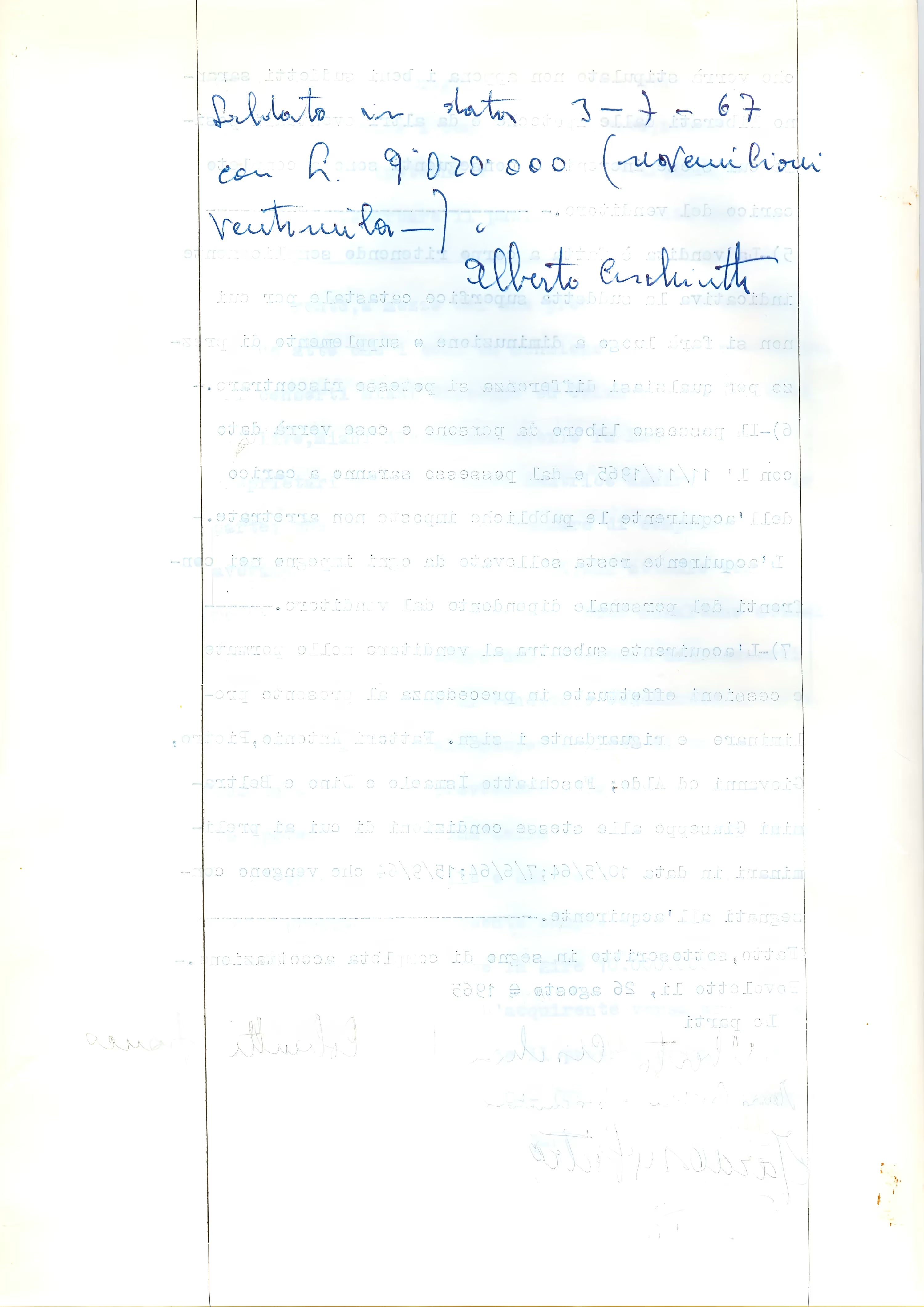
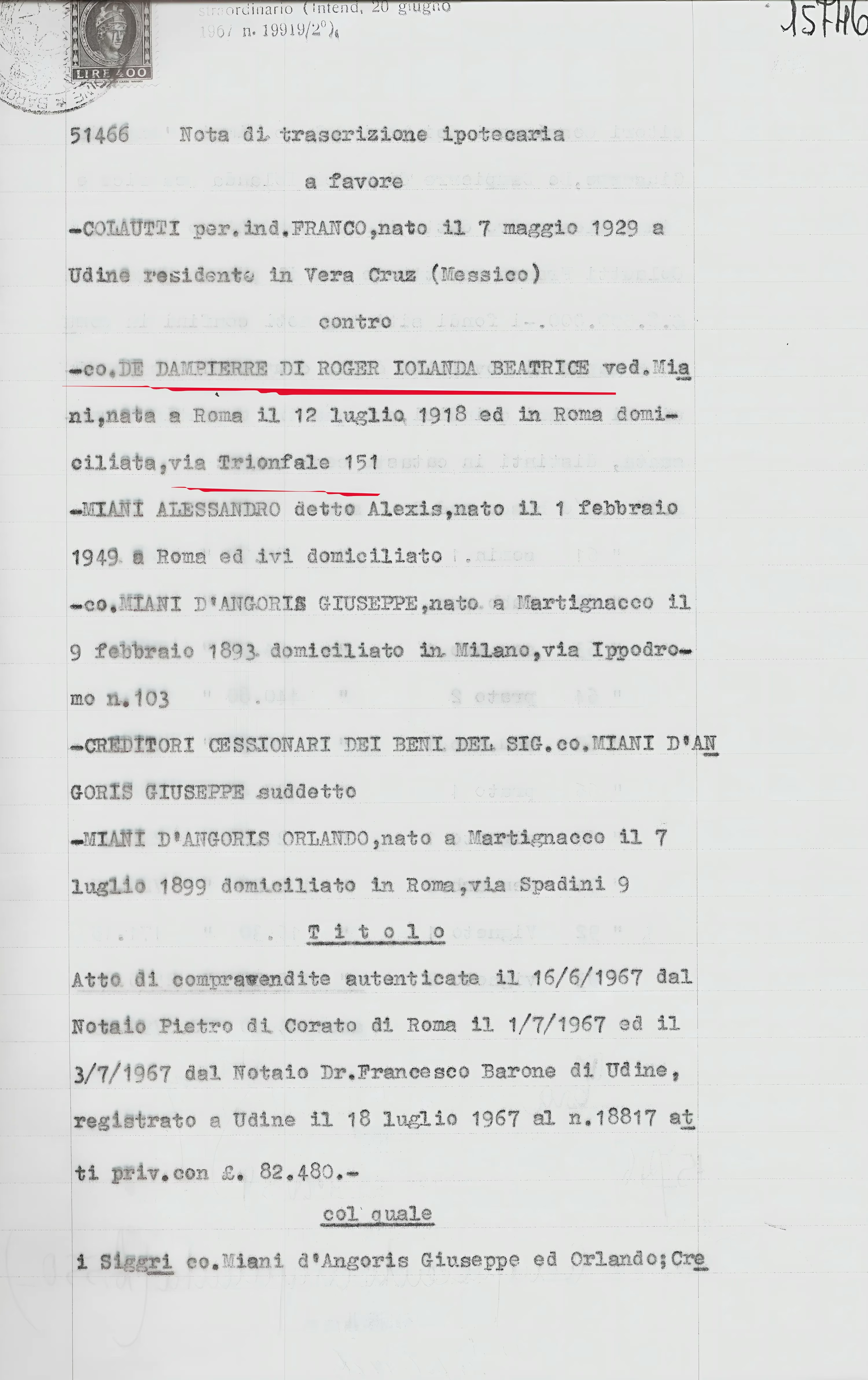
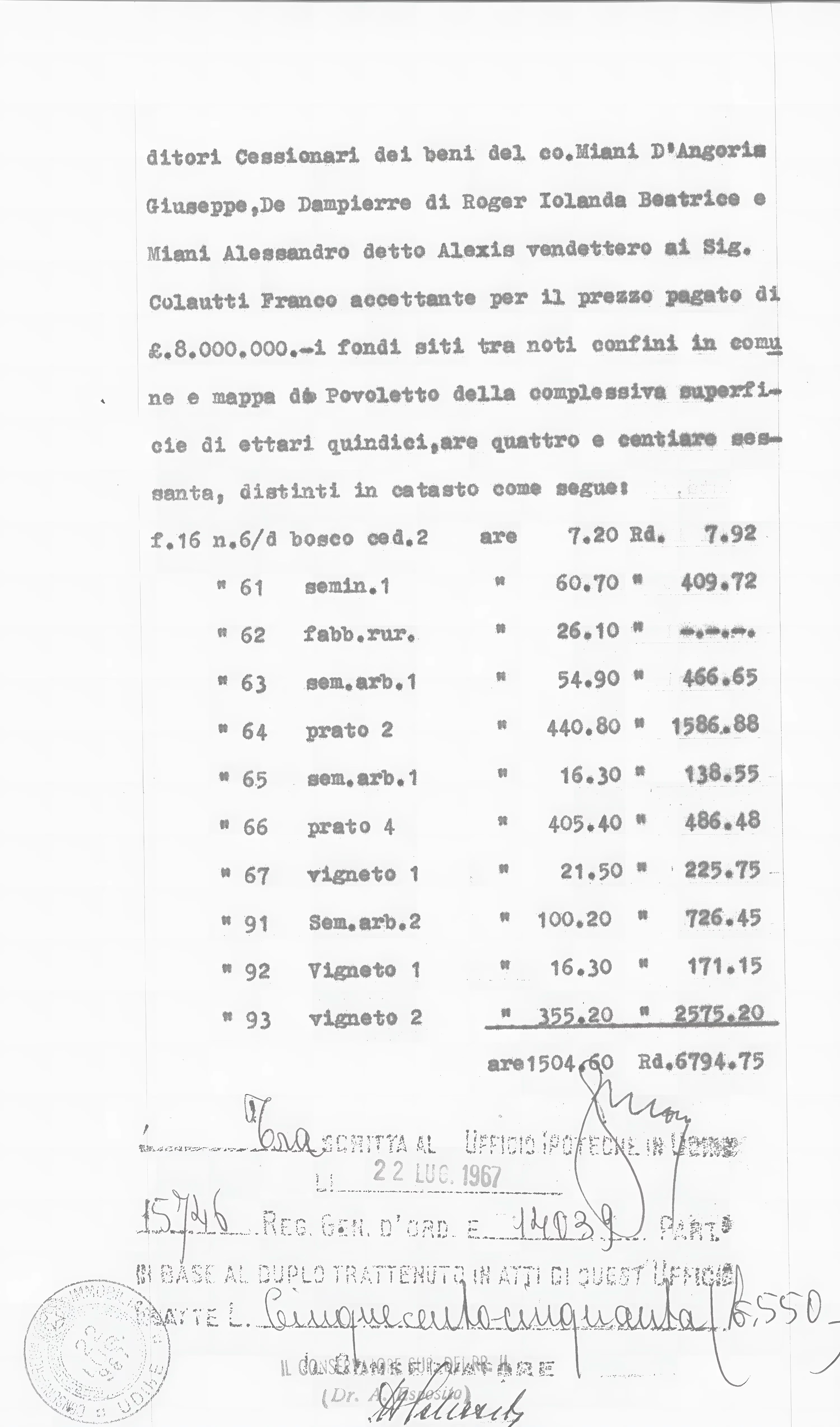 - Sale Act 1,2,3,4 - Release from any lien 5,6
Secondly, Enzo brought running water from the public supply to La Faula. The project had already been drafted before the actual purchase of La Faula by Franco in 1967. In order to justify the connection of Casale Faula to the water main, the Mayor had to form a Consorzio Stradale Interpoderale - a consortium of all the owners of properties along the way to and neighbouring La Faula - to justify the expense with the local Authorities and get a grant. A grant of ITL 1,264,000 was passed on 10th September 1966, but the actual money paid out was ITL 948,000, which had to do the job. The connection crossed the Malina Torrent in a concrete wall. Subsequently, when the bridge was built, the pipe was moved to cross the river along the bridge itself rather than on the river bed. Part of the old pipe still sticks out from the river bed near the remains of the old pebbled ford.
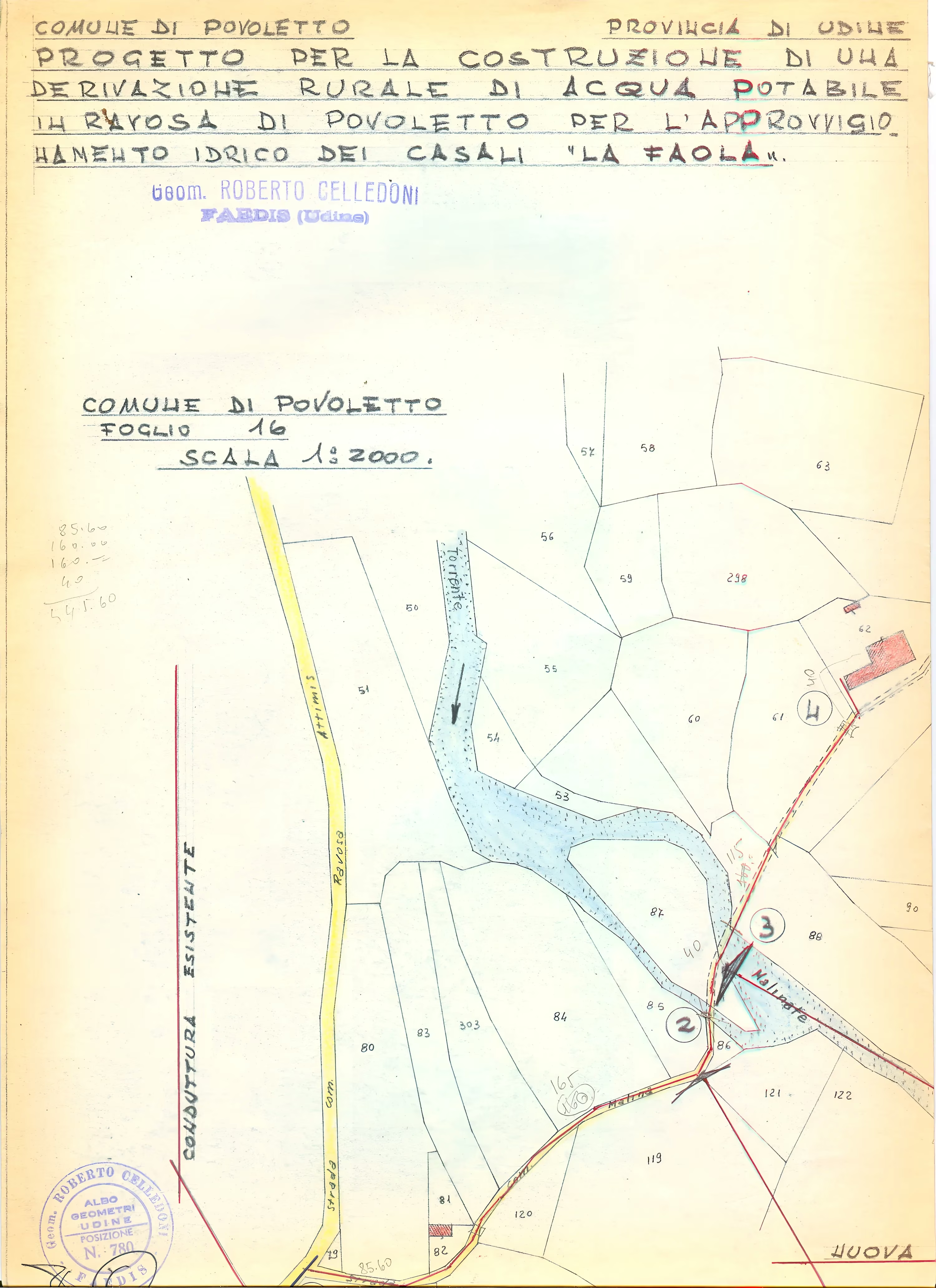 Above, Aqueduct Plan and below, Consortium Document for the bridge ‘reconstruction’
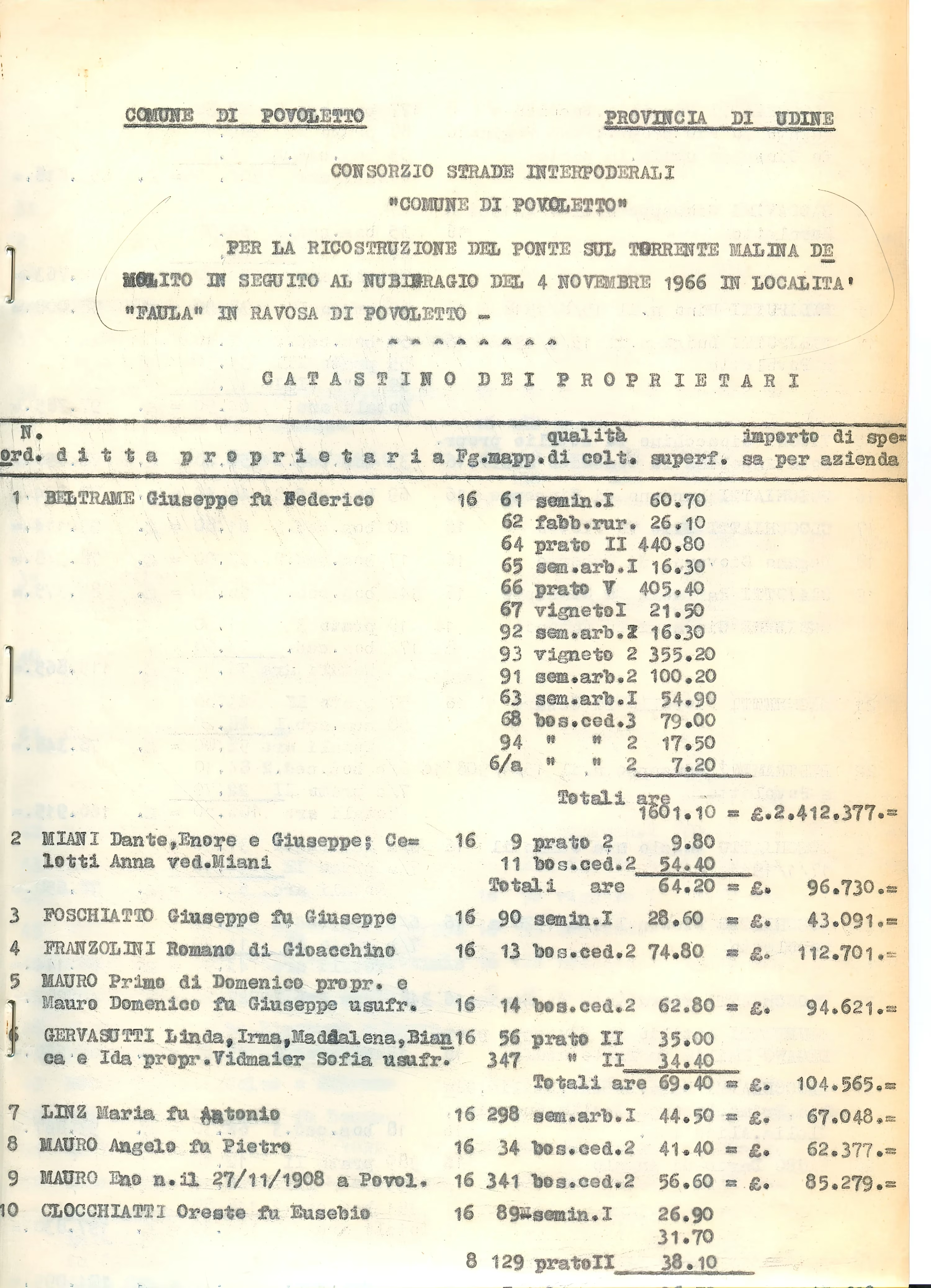
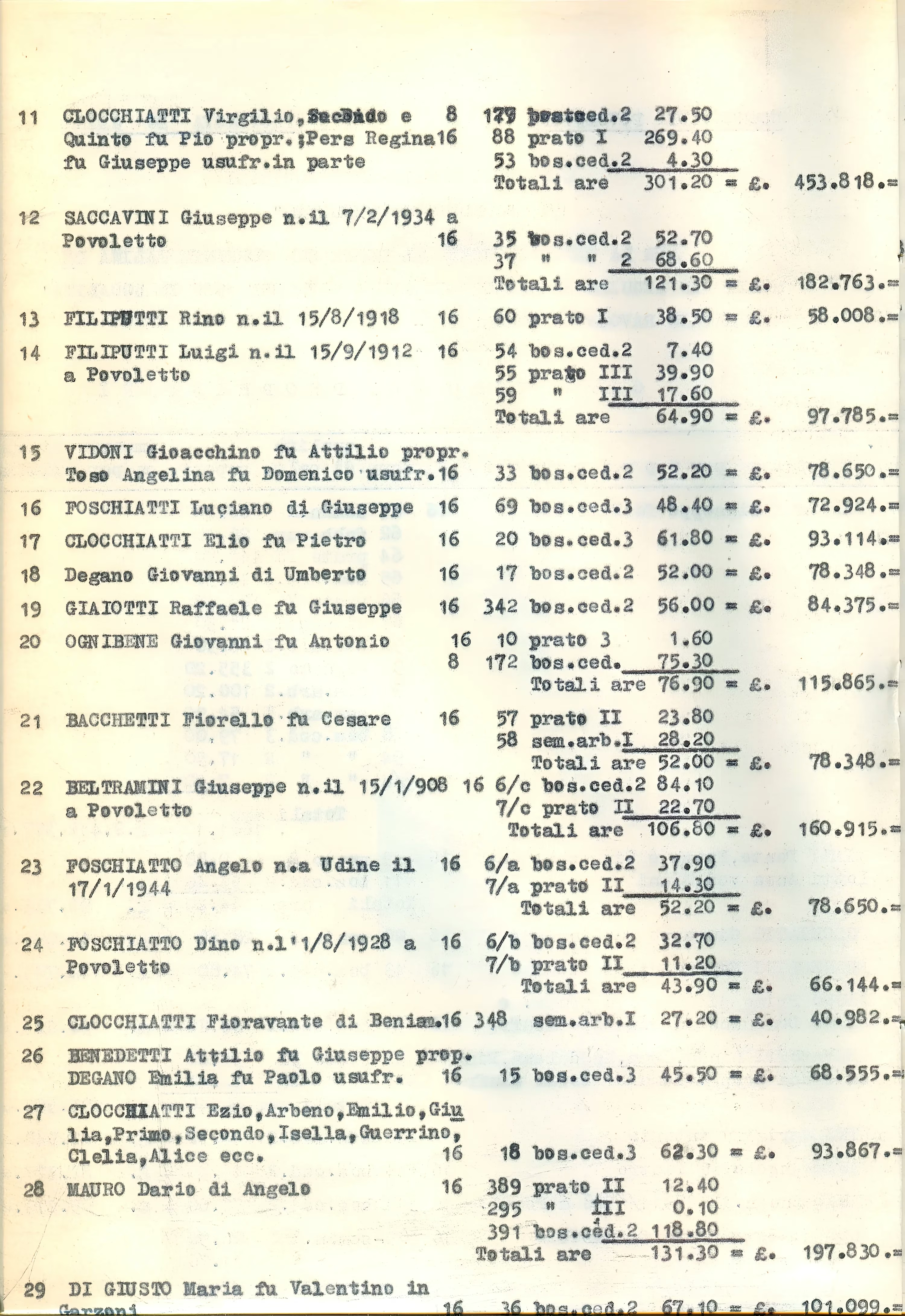
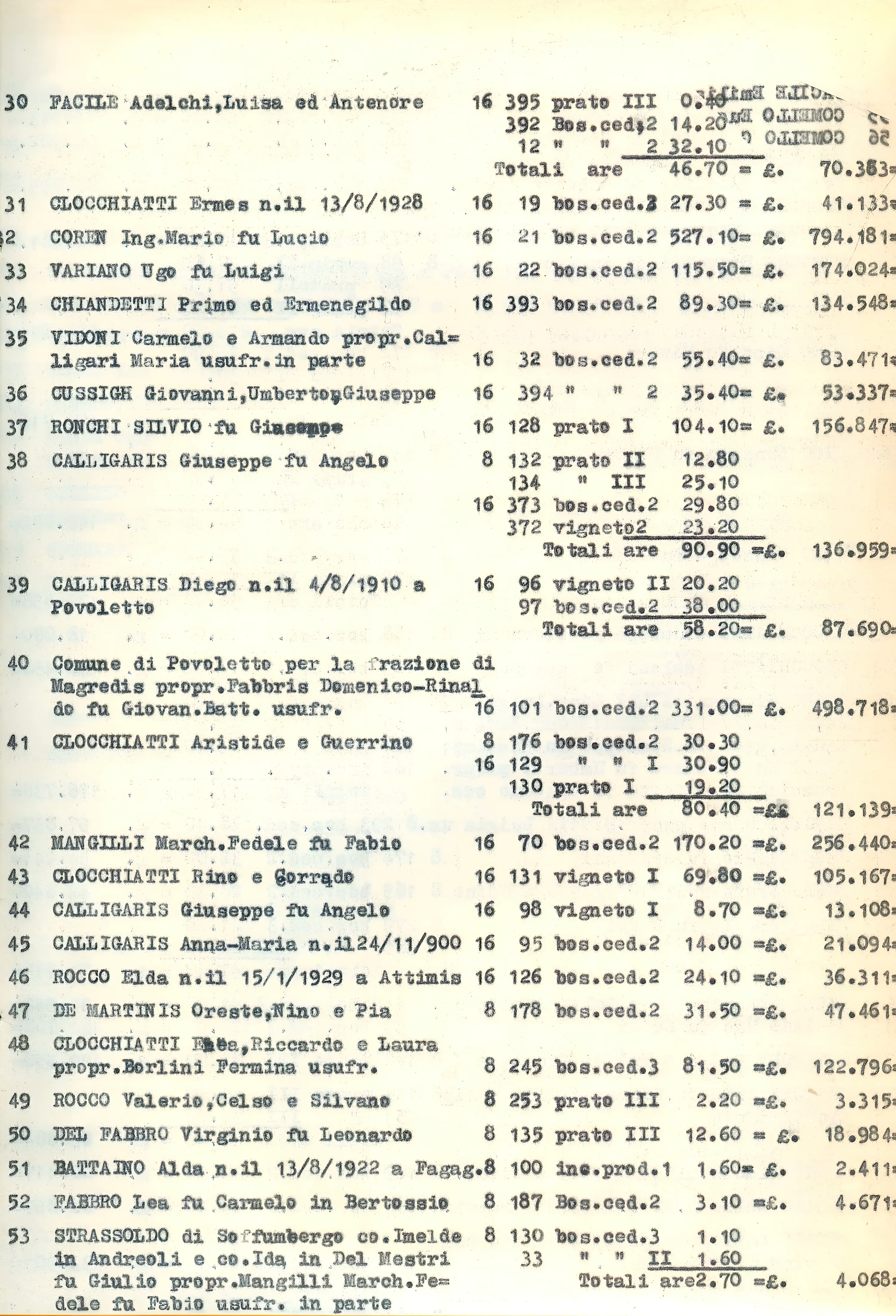
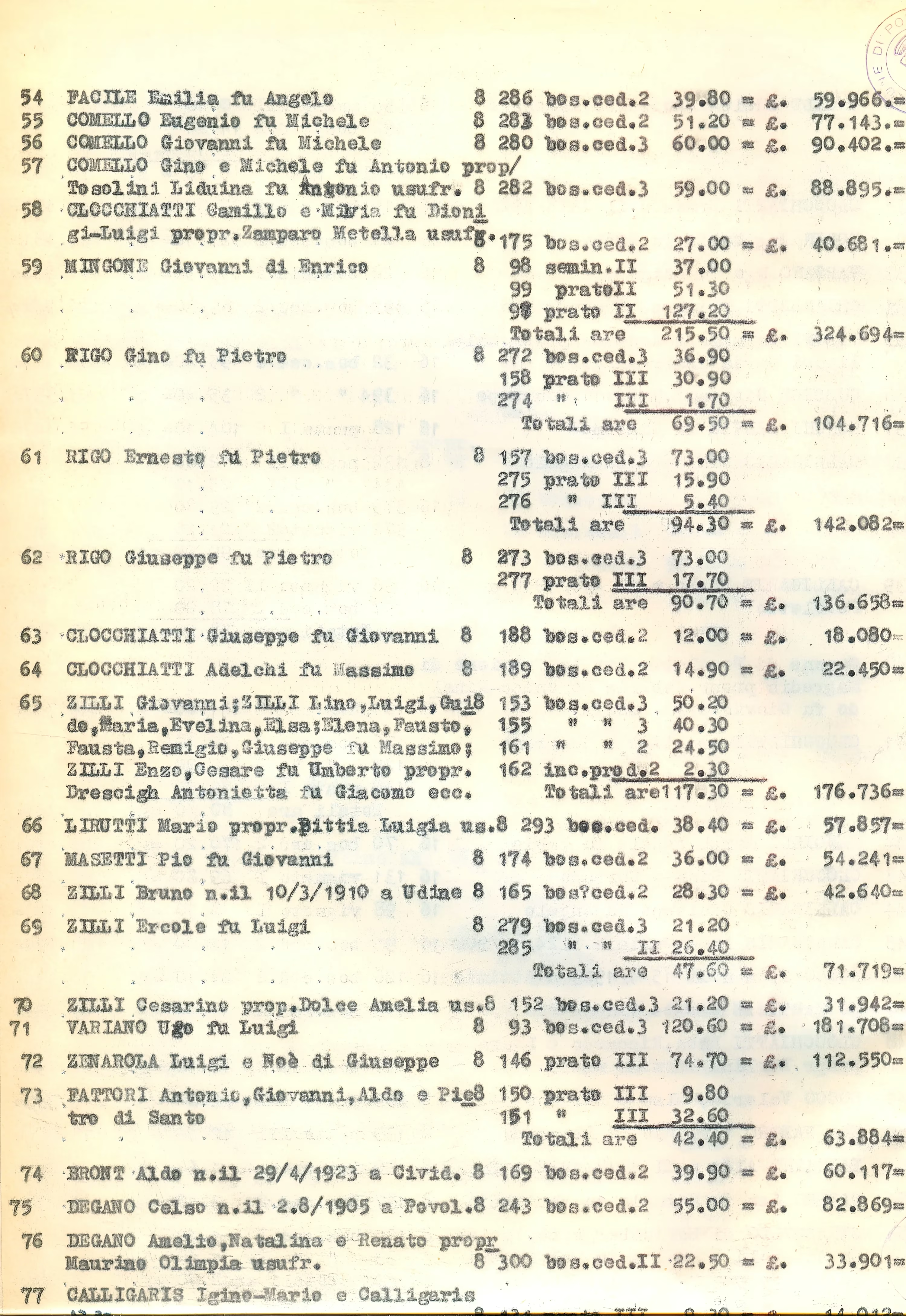
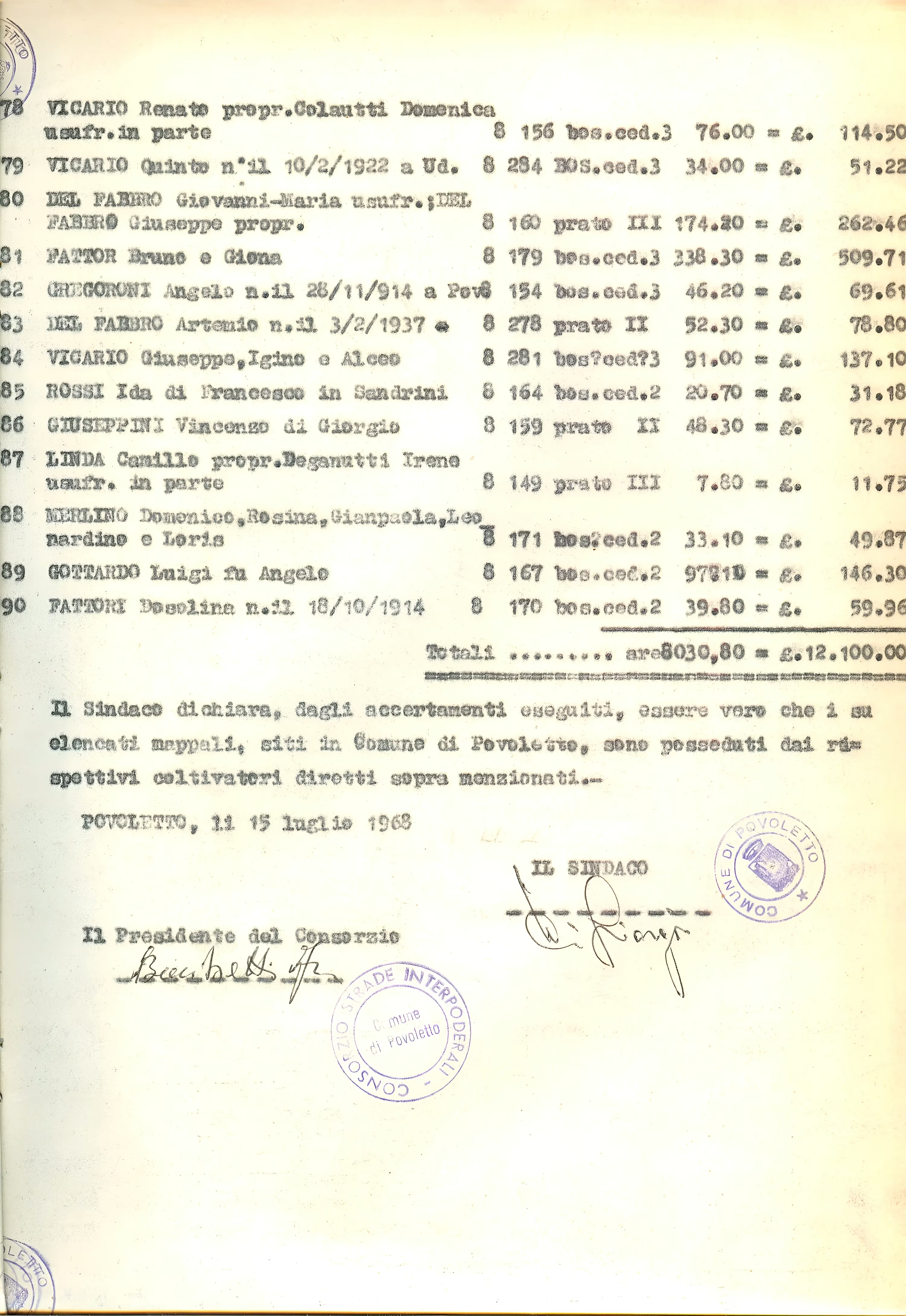 Documento Consonsorzio Strada Interpoderale
Thirdly, Enzo had the bridge built. To justify such an expensive piece of public works, the Mayor had to claim that there had existed a bridge before the flooding of 1958, which had been washed away by the flood waters. To get approval of such a project from the Regional Authorities, he turned for help to the then regional agricultural secretary, Antonio Comelli - native of nearby Nimis - who in later years became the President of the Friuli Venezia Giulia Region. The project for the bridge was drawn up by the Mayor himself and presented for approval and funding on 15th July 1968. Construction of the bridge was shared by two local gangs of builders represented by Dino Foschiatto from Ravosa and Luciano Peressutti from Salt. The bridge was inaugurated on 27th December 1969. Dino Foschiatto recalled that on the day the bridge was tested, a line of trucks loaded with rocks, weighing twice as much as the bridge could nominally carry, i.e. 200 quintals, was made to drive on the bridge. Dino stood on the river bed and saw the bridge sink at least five centimetres and thought to himself, 'gosh, they are not going to pass it' - they, meaning the civil engineers. But, they did. And after over forty years and several floods, the bridge still stands awaiting planned, but not budgeted, repairs by the local council.
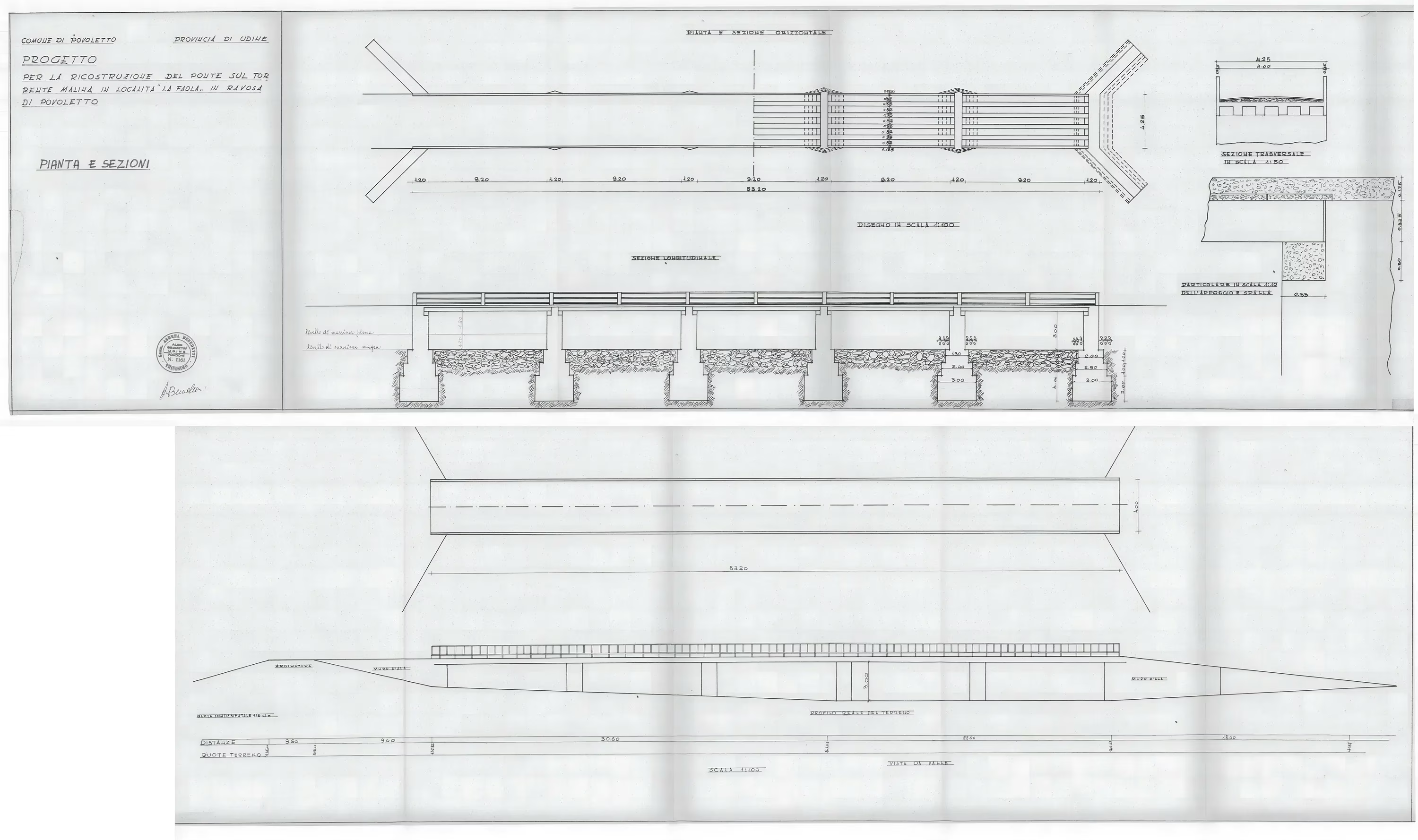
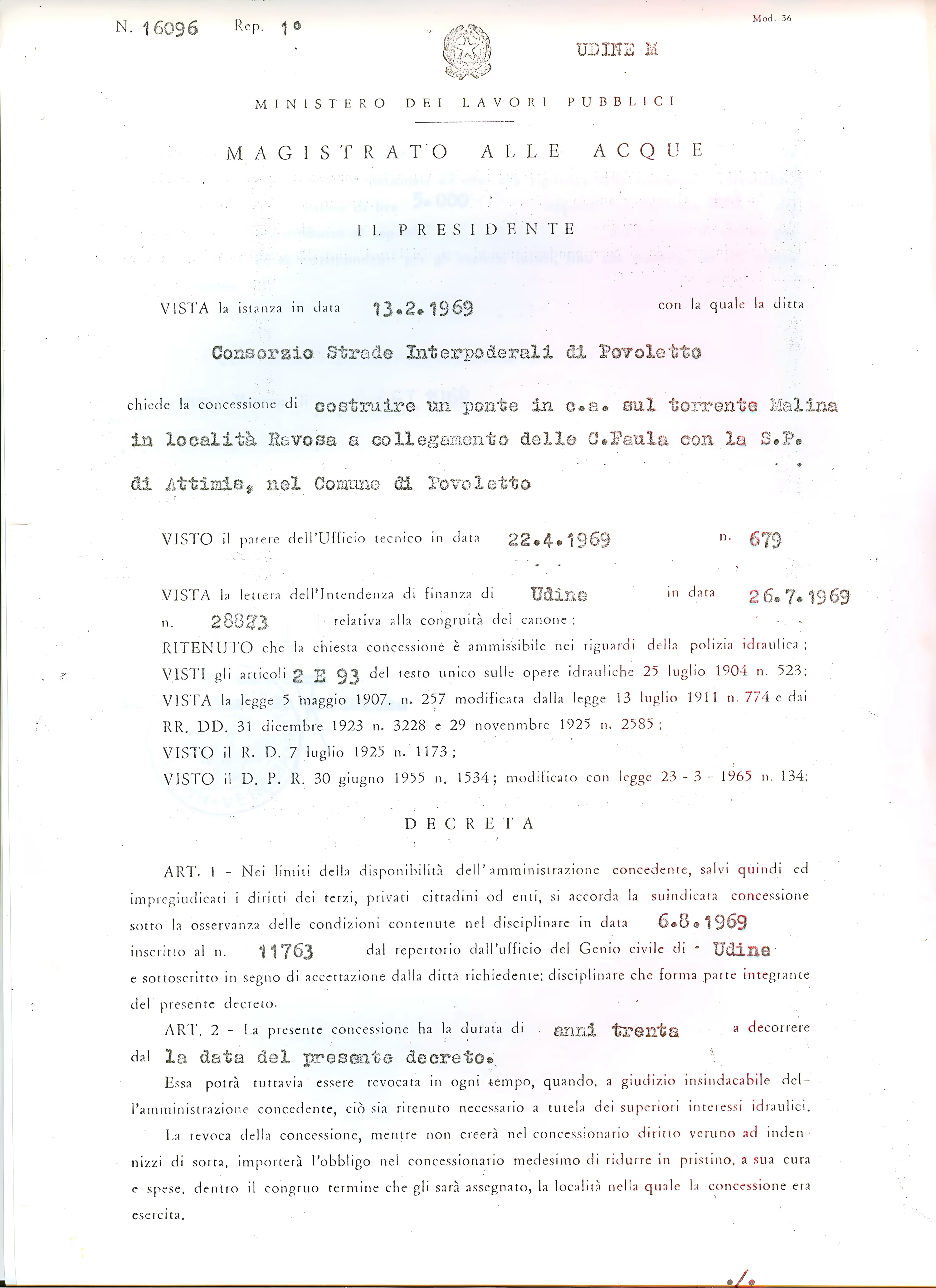
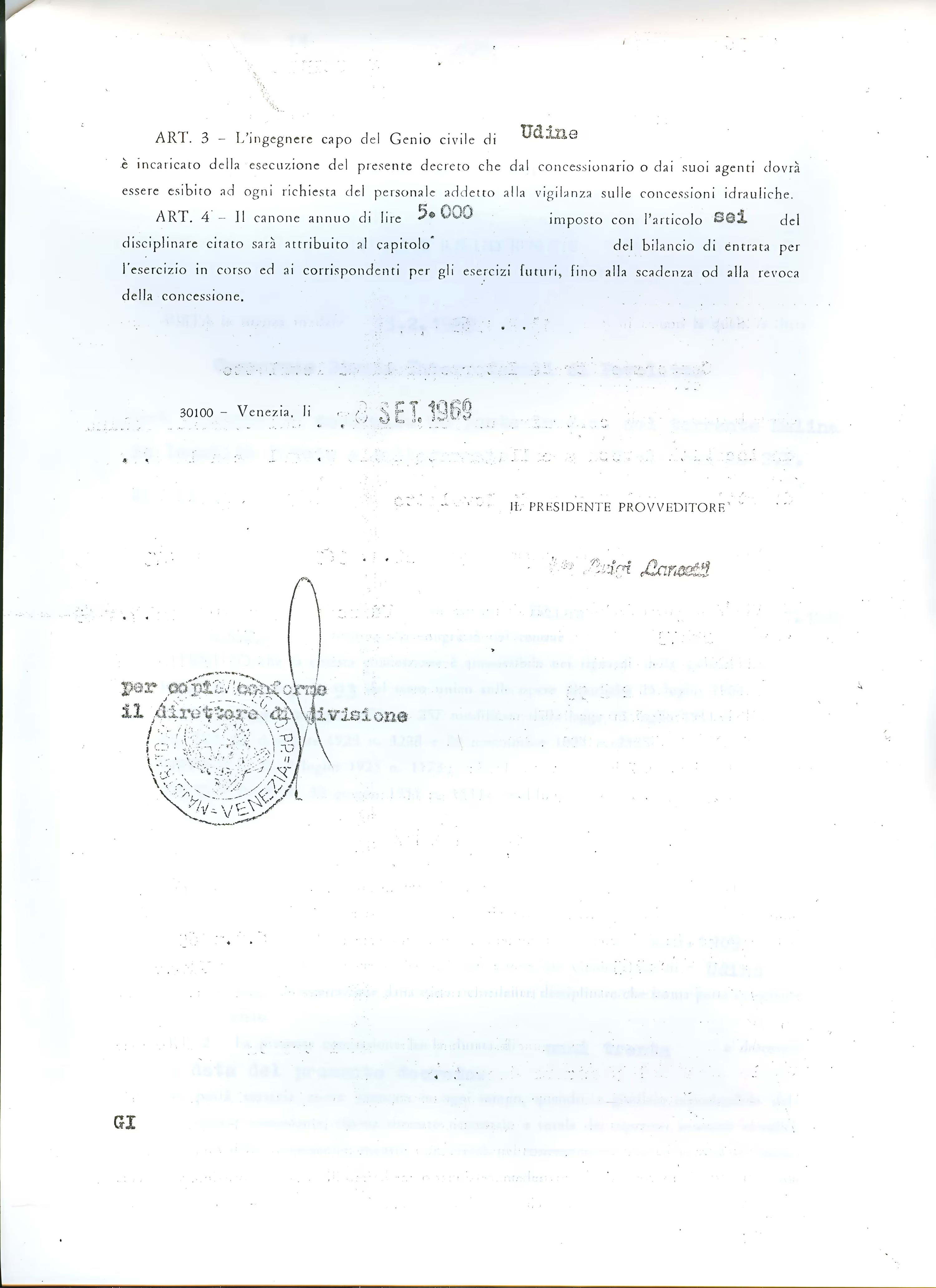 Bridge Plan and Authorities' construction approval and financial commitment
Fourthly, Enzo, with the approval of Franco, started to have some work done on the farm. In the words of local inhabitants, during the time of the Basso Family, the hill had looked like a panettone, the traditional smooth, hill-shaped Italian Christmas cake. But by the late 1960s, it was being taken over by the locust tree (Robinia pseudo-acacia from North America) and other local trees. So, in 1966, Enzo allowed the local Forestry Corps, as an experiment, to plant pine trees - mainly Pinus strobus, Cupressus leylandii and Cupressus arizonica - over four and/five hectares on top of the hill, where once cereals had been cultivated. Blanket foresting was quite fashionable in those years, not just in Italy but other parts of Europe, to withstand the systematic abandonment of mountainous or hilly agricultural land. With hindsight, it would have been better if local tree varieties had been planted, because the hot summers and the shallow topsoil are not suitable for the pine trees at such low latitudes and in the face of global warming. However, on 7th April. In 1969, a local boy, Mario Clochiatti, started a fire which led to the destruction of roughly 1000 plants, which his father, Aristide, promised to replant but never did.
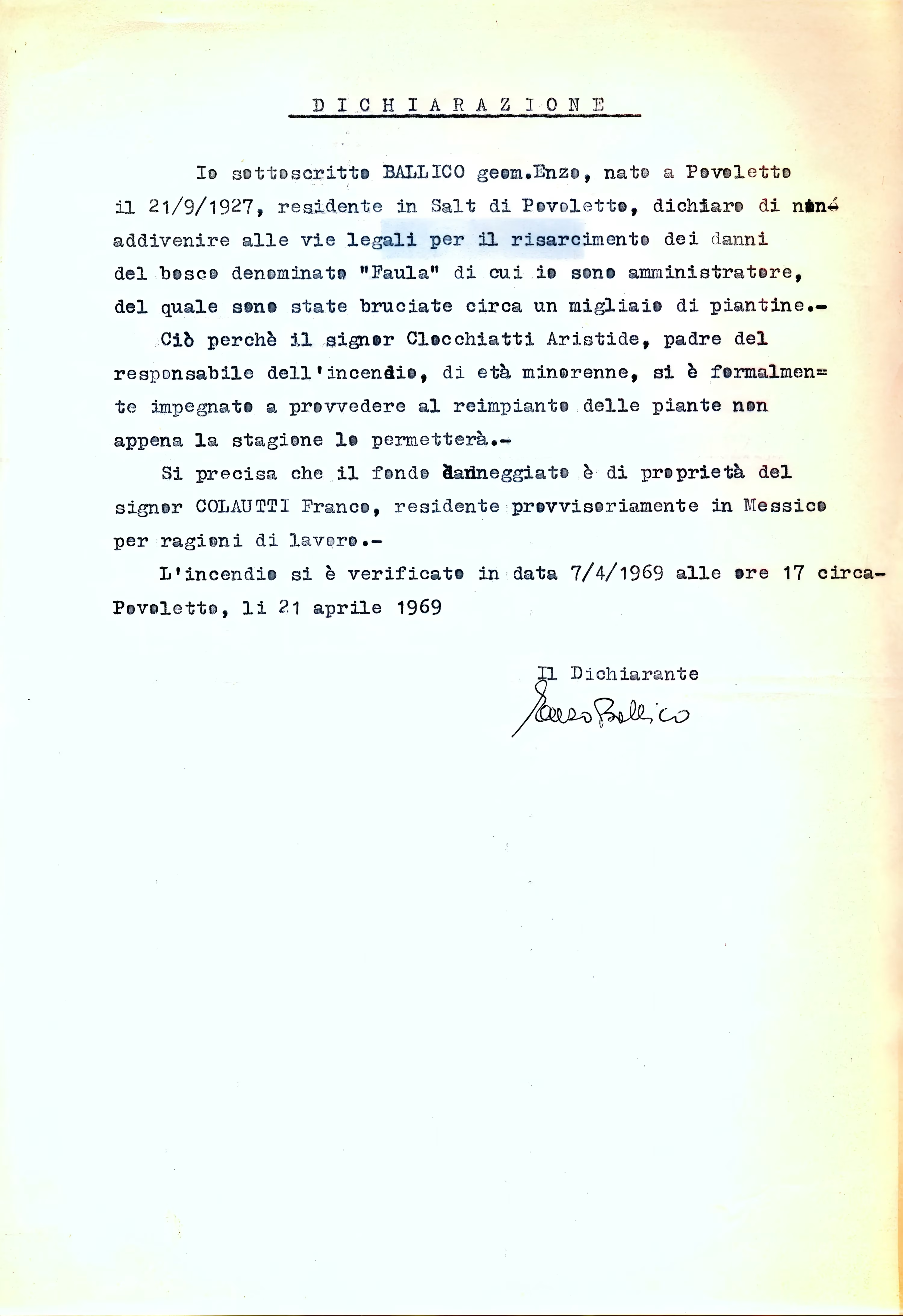 Legal Injunction Fire
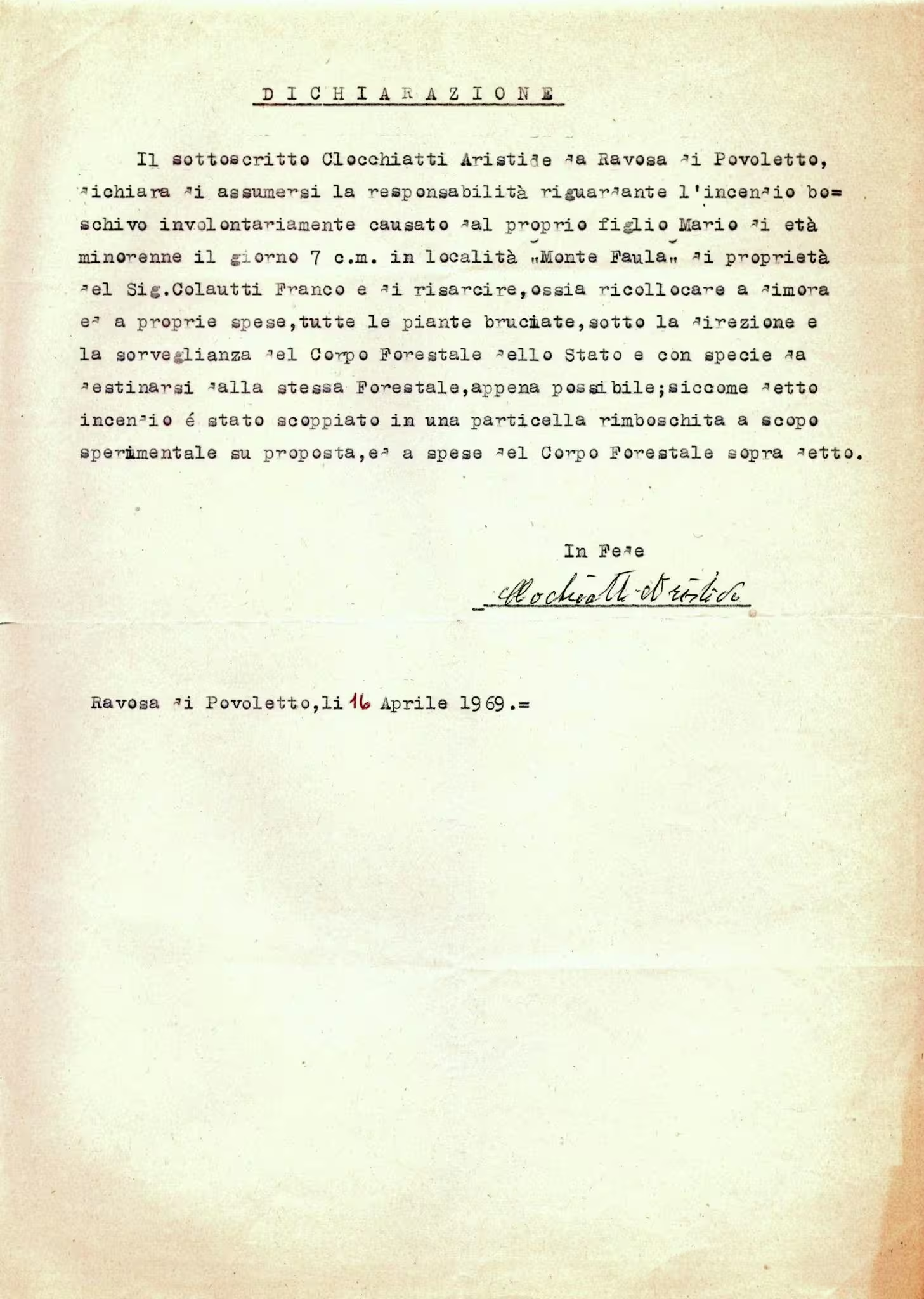 Promissory Declarations
On 21st September 1967, Enzo also requested permission from the Region to replace and replant the existing vineyards. As it was mentioned above, the old vineyards had been terraced by pick and shovel. Unfortunately, they were not suitable for mechanised work. So in 1968, Dino Comelli from Nimis came with his digger/front-end loader and truck and terraced all the hill, except for an area which was subsequently terraced in 2005, and the new plants and structures for their training were put in place. Some varieties were replanted in 2003 and 2004, but fundamentally, the layout of the terraced vineyard is still the same. Another vineyard was added and completed in 1971.
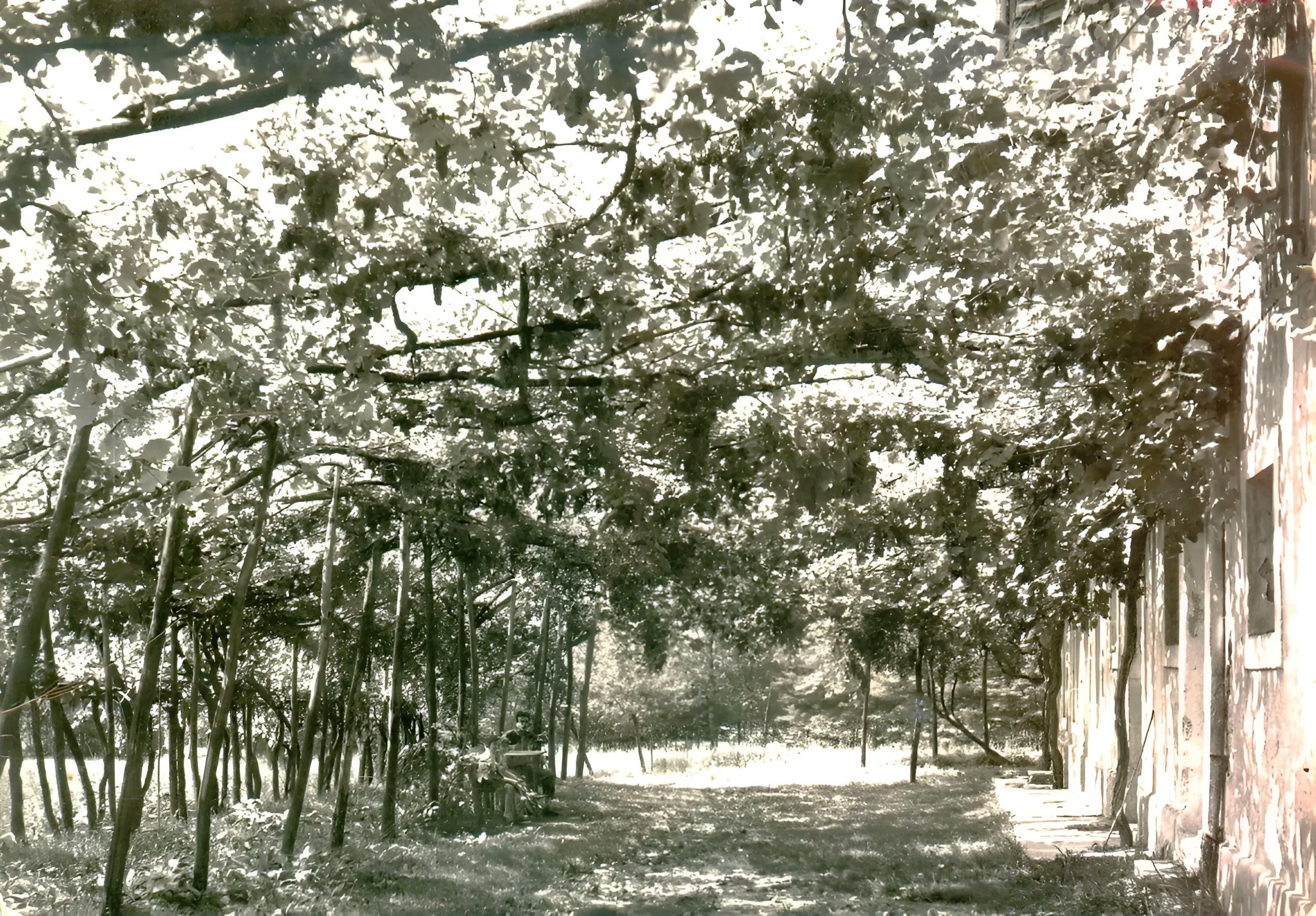 The Pergola at the End of the 1960s - A Stark Contrast with the Basso Years.
On the left, Pieri Fattori and his Daughter Franca
The Pergola at the End of the 1960s - A Stark Contrast with the Basso Years.
On the left, Pieri Fattori and his Daughter Franca
Finally, Enzo found a family to be caretakers at La Faula. Initially, a local farmer, Angelo Clochiatti, had kept an eye on the uninhabited property in exchange for a fee of Lire 60,000 a month. Eventually, Giuseppe Beltrame (nicknamed Bepo Giachete because he was always wearing a jacket) and his family moved into the farmhouse at La Faula. In exchange for free accommodation, in a house where the only toilet (the current Bungalows boiler room) was outside next to the pigsty (Yellow Bungalow), as was usual, and baths in winter had to be taken in a bathtub in the stall or the kitchen, he tended the vineyard, made hay and generally looked after the property. At the same time, he cultivated his fields in the nearby village of Grions. Beppo and his brother had divided up the property inherited from their father. Beppo had kept all the fields, and his brother had kept the house. So, while at La Faula with some income from La Faula and the income from his property, slowly but surely, he started building a house in his native village, where he moved to in 1972 when he left La Faula.
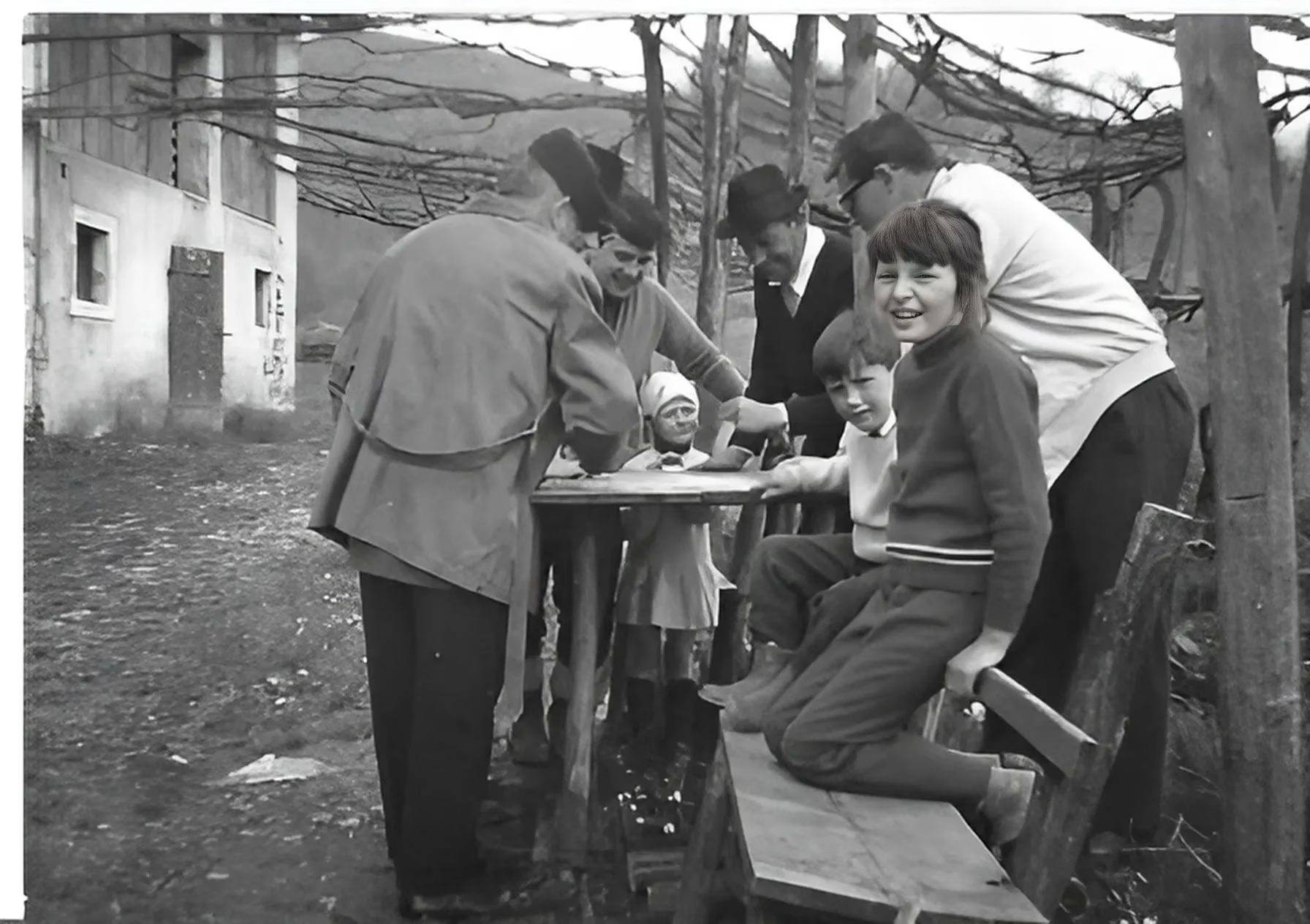 Giuseppe Beltrame (3rd Adult Person from the Left) with Enzo Ballico (with White Jacket)
and Enzo's Children Andrea and Flavia (on the Bench in the Foreground)
under the Pergola at La Faula
Giuseppe Beltrame (3rd Adult Person from the Left) with Enzo Ballico (with White Jacket)
and Enzo's Children Andrea and Flavia (on the Bench in the Foreground)
under the Pergola at La Faula